 BackInTime
How to Share Old Family Photos and Find Their Stories
You recognize your grandmother in the photograph, but the woman beside her is unfamiliar. There is a house in the background that nobody has mentioned. When you share old family photos, a relative may notice something you have looked past for years: a school uniform, a kitchen doorway, a neighbor who was always there. Start with a few pictures and a question. You do not need to finish sorting every album before asking.
The images in this article are AI-generated editorial illustrations, not historical family photographs or screenshots of BackInTime.
Start with a few photographs you are curious about
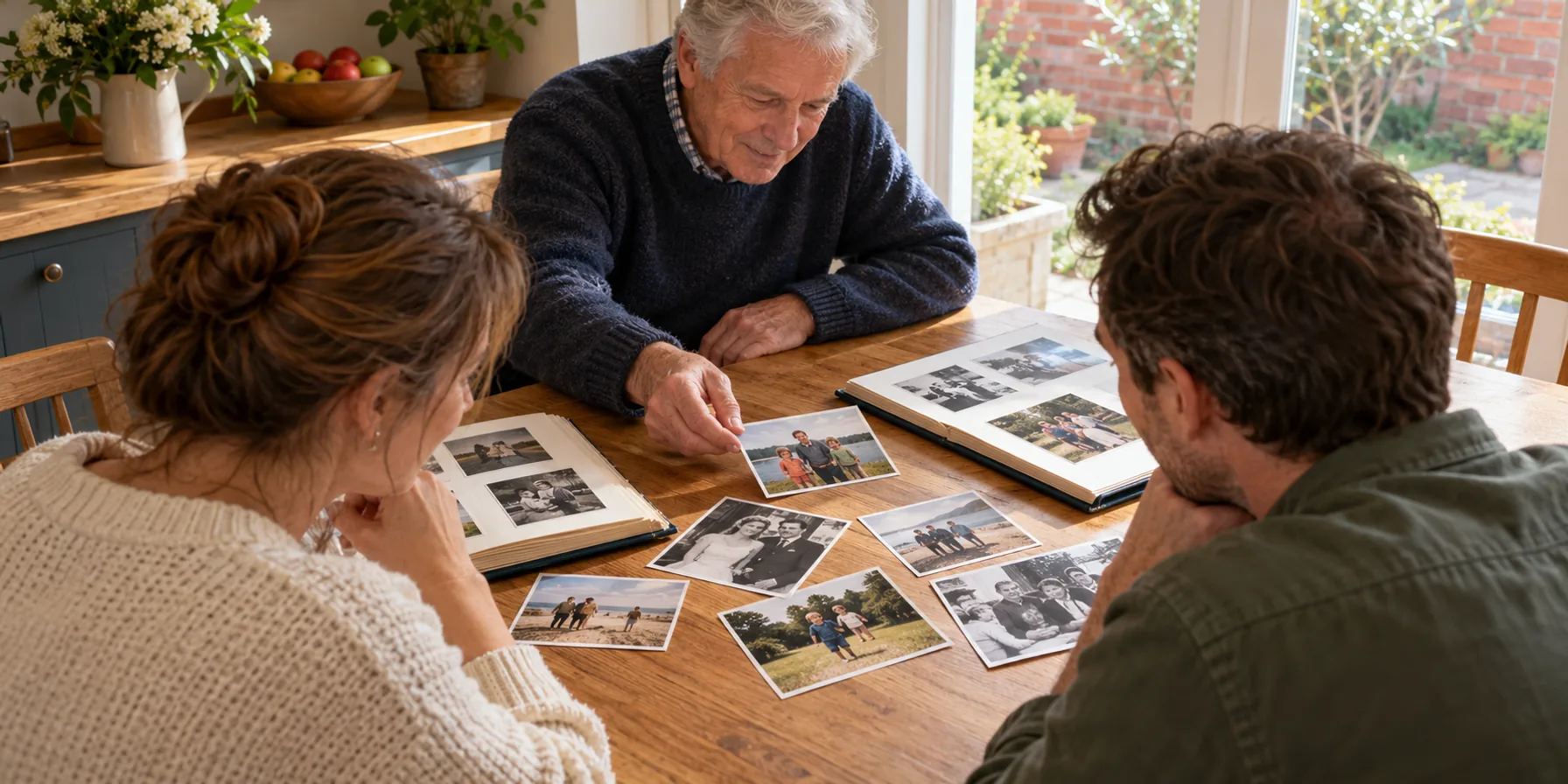
Choose a small group of pictures, perhaps five from the same album or family occasion. A manageable selection gives someone room to look closely. Include one or two familiar faces alongside the unknown ones, so your relative has somewhere to begin. If you are unsure which pictures to choose, start with an event they attended.
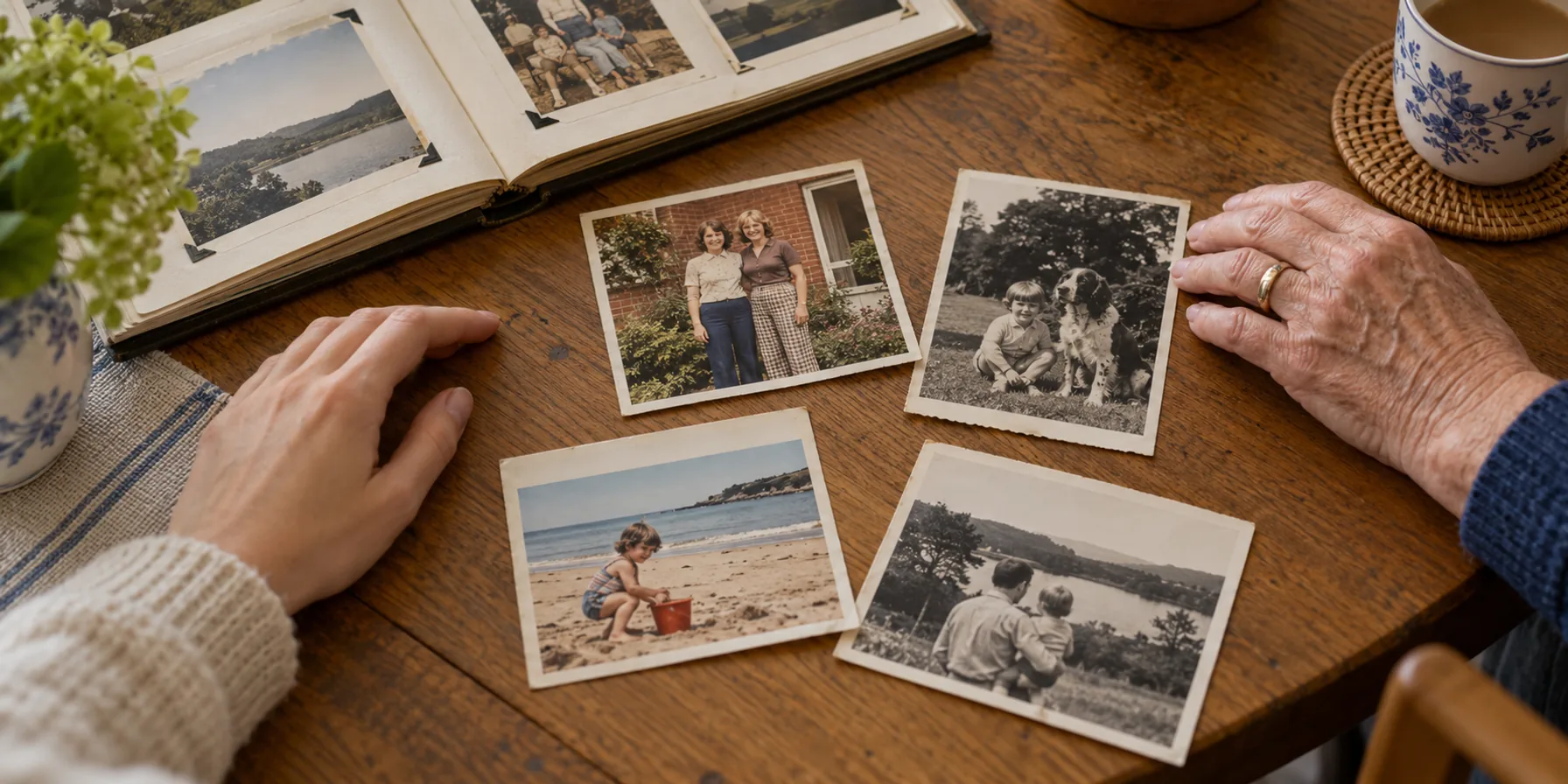
Make clear digital copies and keep the original files. Capture the whole print, including its edges, and the back if there is handwriting. An album page may hold useful clues too: neighboring pictures, captions, or the order in which someone arranged them. Photograph that context before moving anything. Leave fragile prints attached to their pages.
Give each image a simple filename or number so you can match a reply to the right picture. “Kitchen-01” will do. You can add names later without losing track of which photograph you discussed.
If a picture is faded or damaged, our guide to restoring old photos explains how to prepare a copy and assess repairs. Share the untouched scan alongside any restored version. A reconstructed detail is not evidence of what was originally there.
Share a picture with a question someone can answer
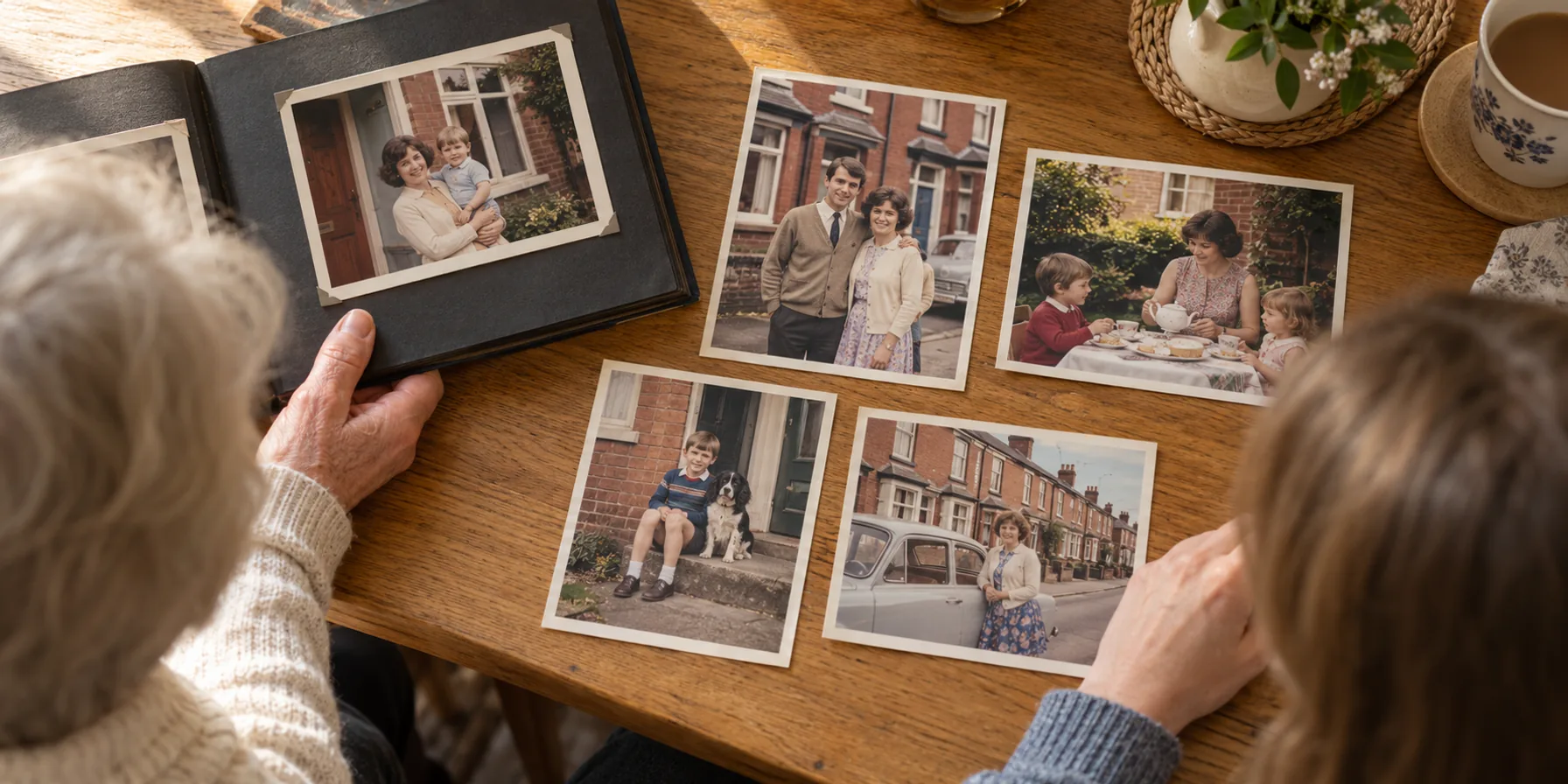
Send the selection to a relative who might know the people or place. Tell them why you chose it: “I found these in Mum’s album. I think this is the house where you grew up. Does the doorway look familiar?”
That gives the conversation a starting point. Ask one question at a time and leave space for an answer you did not expect. “What do you remember about that kitchen?” may bring back something that a request for a date would miss.
The Museum of Ventura County’s family-history guide suggests asking relatives about the people, place, occasion, and photographer. You can follow up with a question about what happened before or after the picture was taken.
Use whatever makes replying comfortable: a phone call while you both look at the same image, a message, or a visit with the album. If you record a conversation, ask first. Someone may remember a name immediately and the occasion a week later. You can return to the photograph without making the conversation feel like a test.
Before passing pictures beyond that conversation, check who is comfortable with them being shared. A family photograph can include people or experiences that someone would prefer to keep within a smaller circle.
Keep the answers beside the photographs
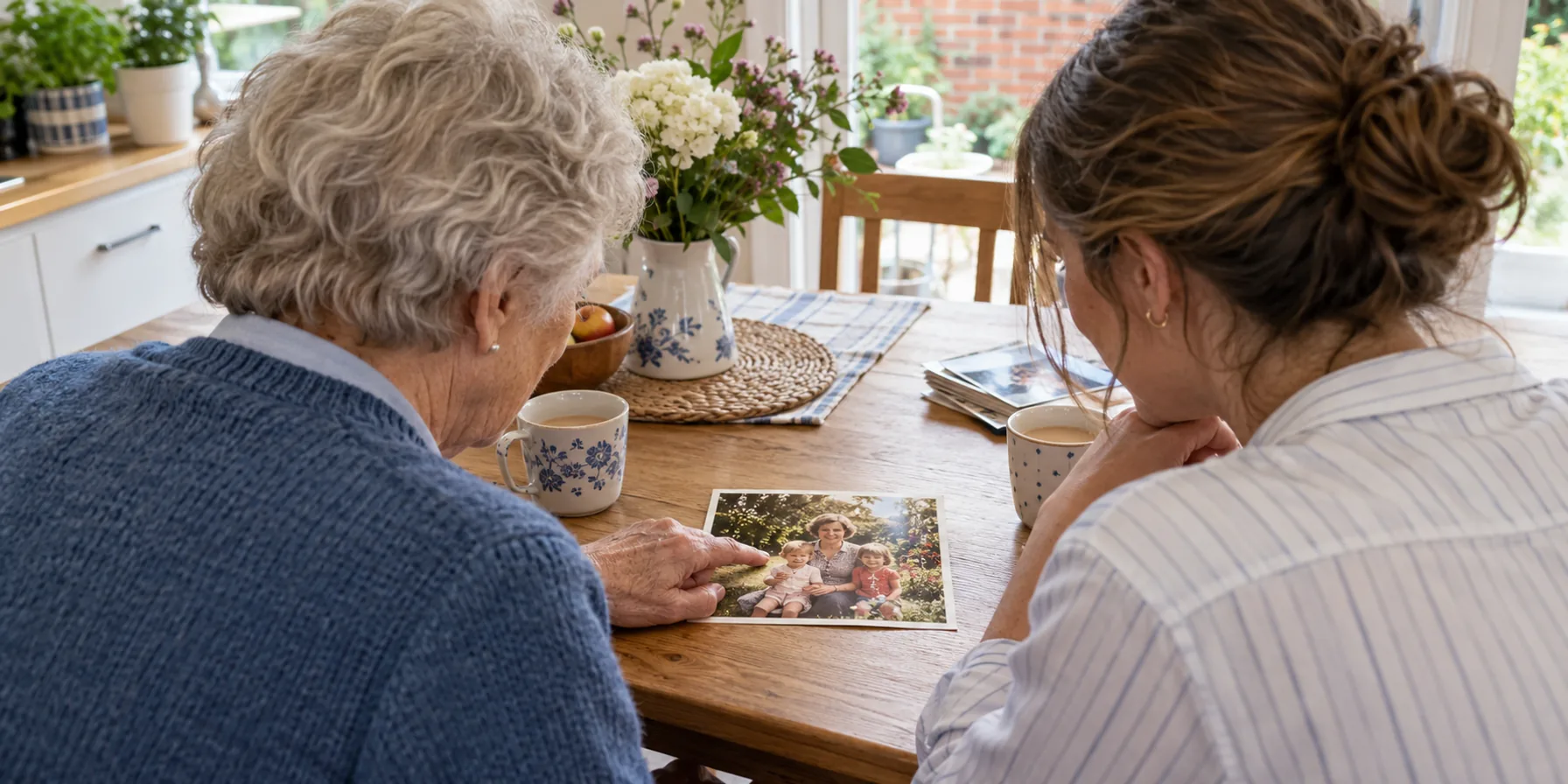
Save the useful parts of the conversation while they are still easy to match to a picture. Record who supplied the information and when. A note might read: “Aunt May thinks this was taken outside her first flat, around 1972. She recognizes the neighbor on the left but cannot remember her name.”
The uncertainty belongs in the note. “Around 1972” and “possibly the neighbor” tell a future reader more than a confident label based on a guess. If two relatives disagree, keep both accounts until you have more evidence. Handwriting on the print, another photograph from the occasion, or a dated letter may help.
Distinguish what is visible in the photograph from what someone remembers. The picture may show a birthday cake; the story about who baked it comes from the person you asked. Both are worth keeping, with their sources clear.
Keep a separate copy of the notes with your digital files as well. A simple document that uses the same filenames is enough. Information should remain understandable if you later move the photographs to another service.
Give relatives a way to add their own pictures
Once someone recognizes an occasion, ask whether they have a photograph from it too. Their picture may show the people outside your camera’s frame, or the same room several years earlier. Keep a note of whose collection each copy came from.
In BackInTime, a Story groups photographs with context such as the people, place, and approximate date. The owner can invite relatives as viewers, or as contributors who can add their own photos. The owner maintains the Story’s description and context, so agree who will collect the answers and update that account.
Start with one occasion or place rather than the whole family archive. A Story about your grandparents’ home gives everyone a clear reason to look through their albums. Relatives can contribute at their own pace, and a small collection can grow when another picture turns up.
You can begin with a photograph you already have. Choose one you have always wondered about, share it with someone who might remember, and keep their answer with the picture.