 BackInTime
A Brief History of Photography: Daguerreotype to Pocket
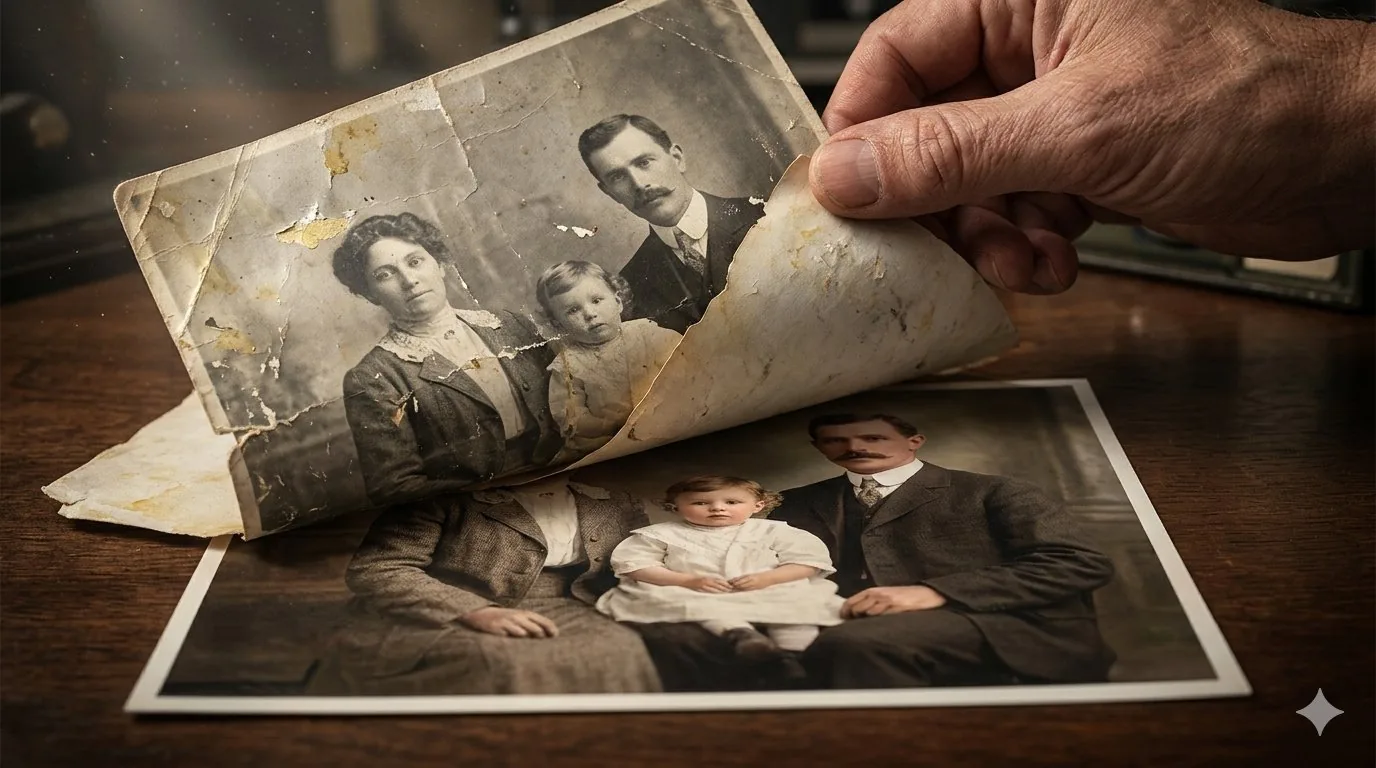
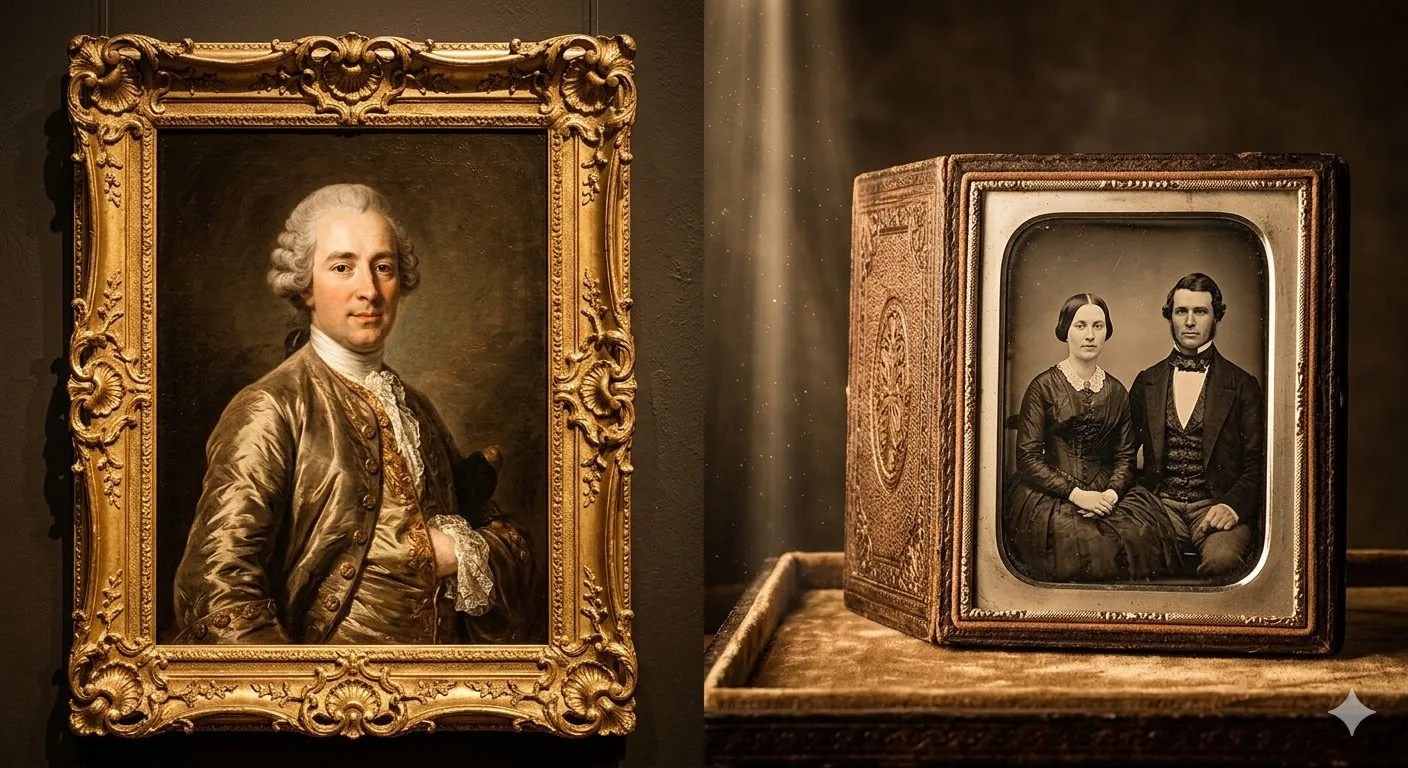
Before photography, commissioning a painted portrait was beyond the means of many families. A camera offered another way to keep a likeness of someone, and as photographs became cheaper, more people could afford one.
From the daguerreotype to the phone camera, each change in the technology has affected which moments we photograph and how we keep them.
The first permanent photographs
The history of photography begins with attempts to make a lasting image using light-sensitive materials.
In 1826, French inventor Joseph Nicéphore Niépce made a permanent photograph of the view from his window in Burgundy. It required a long exposure, and the surviving image is difficult to make out.
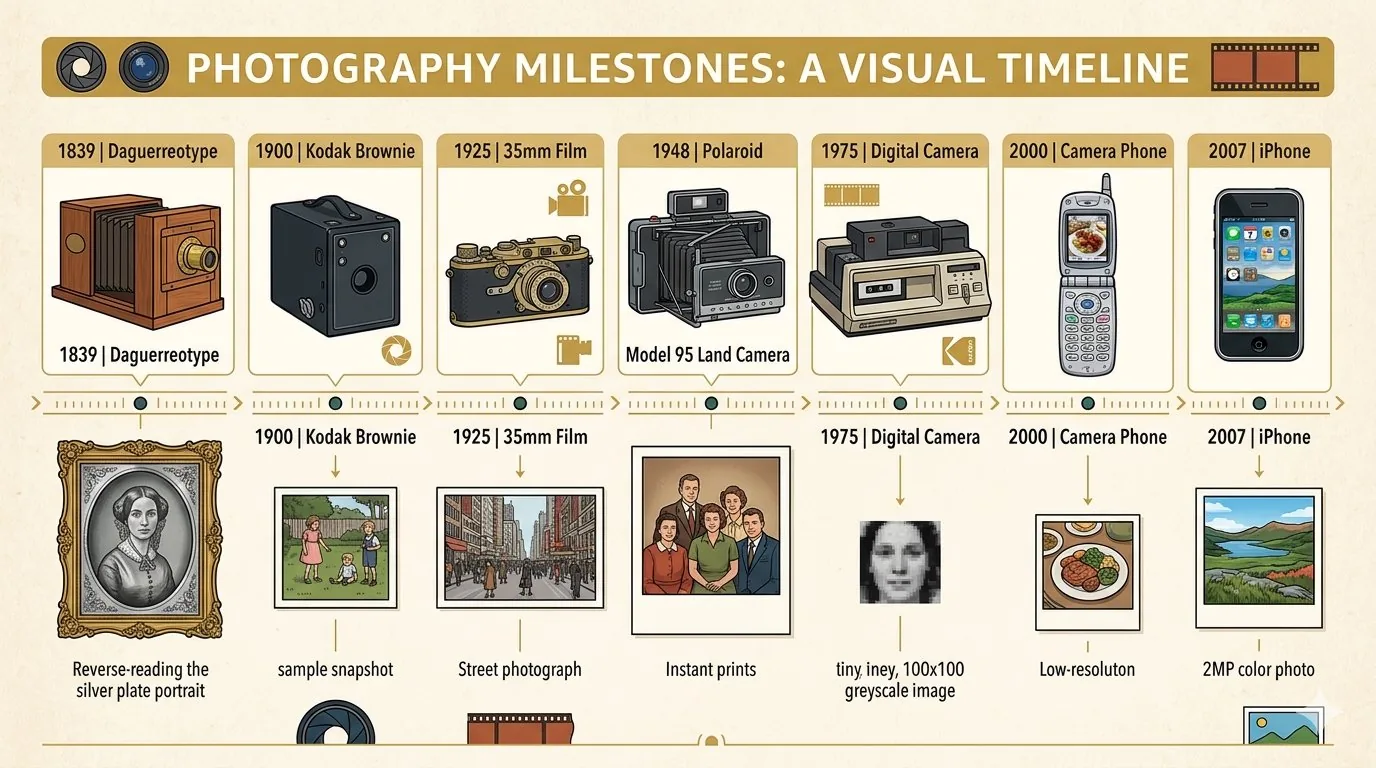
In 1839, Louis Daguerre introduced the daguerreotype. Each image formed on a polished silver surface and had no negative from which to print copies. Early portraits could require a sitter to remain still for minutes, sometimes with a support behind the head.
Long exposures help explain the serious expressions in early portraits. The conventions of painted portraiture mattered too: a formal pose suited an expensive photograph that might be the only portrait a family commissioned.
Photographs as keepsakes
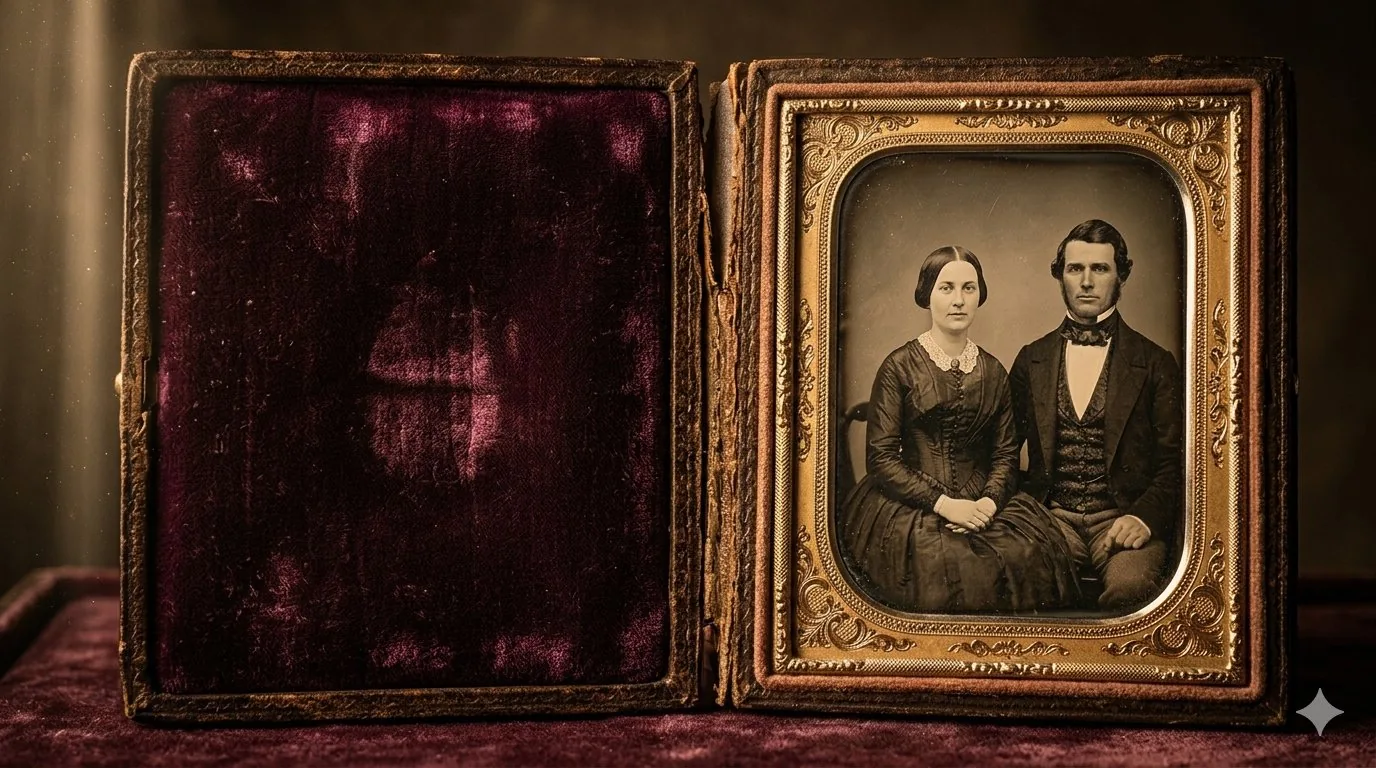
Some nineteenth-century families commissioned portraits after a relative died. A post-mortem photograph might be the only image they had of a child who had never been photographed alive.
These pictures can be difficult to look at today. Children were sometimes posed as though asleep or held by a parent. For the family, the photograph was a keepsake of someone they had lost.
That wish to keep a person’s likeness is familiar to anyone who has saved a parent’s portrait or scanned a grandparent’s wedding photo.
Family records and public history
As photography became more affordable, portraits recorded people who rarely appeared in commissioned paintings: labourers, immigrants, and families making a home in a new place.
Photography also brought distant events into public view. Civil War battlefield photographs, images of the Great Depression, and photographs from the liberation of concentration camps documented suffering that many viewers had not seen for themselves. Images from the Vietnam War had a similar reach.
Some photographs became widely recognised records of an event: the flag raising at Iwo Jima, the girl fleeing napalm in Vietnam, and the man standing in front of tanks in Tiananmen Square. A photographer’s choice of frame shapes what viewers see and remember.
Photographs have also been manipulated for much of their history. Nineteenth-century spirit photographs faked ghostly figures. Stalin’s rivals were removed from official images. Today, AI editing makes an image’s processing history especially useful. BackInTime uses C2PA Content Credentials to document restoration work.
A roll of film, a limited number of chances
George Eastman’s Kodak camera, introduced in 1888, helped make photography accessible to people without darkroom skills. Its slogan was: “You press the button, we do the rest.”
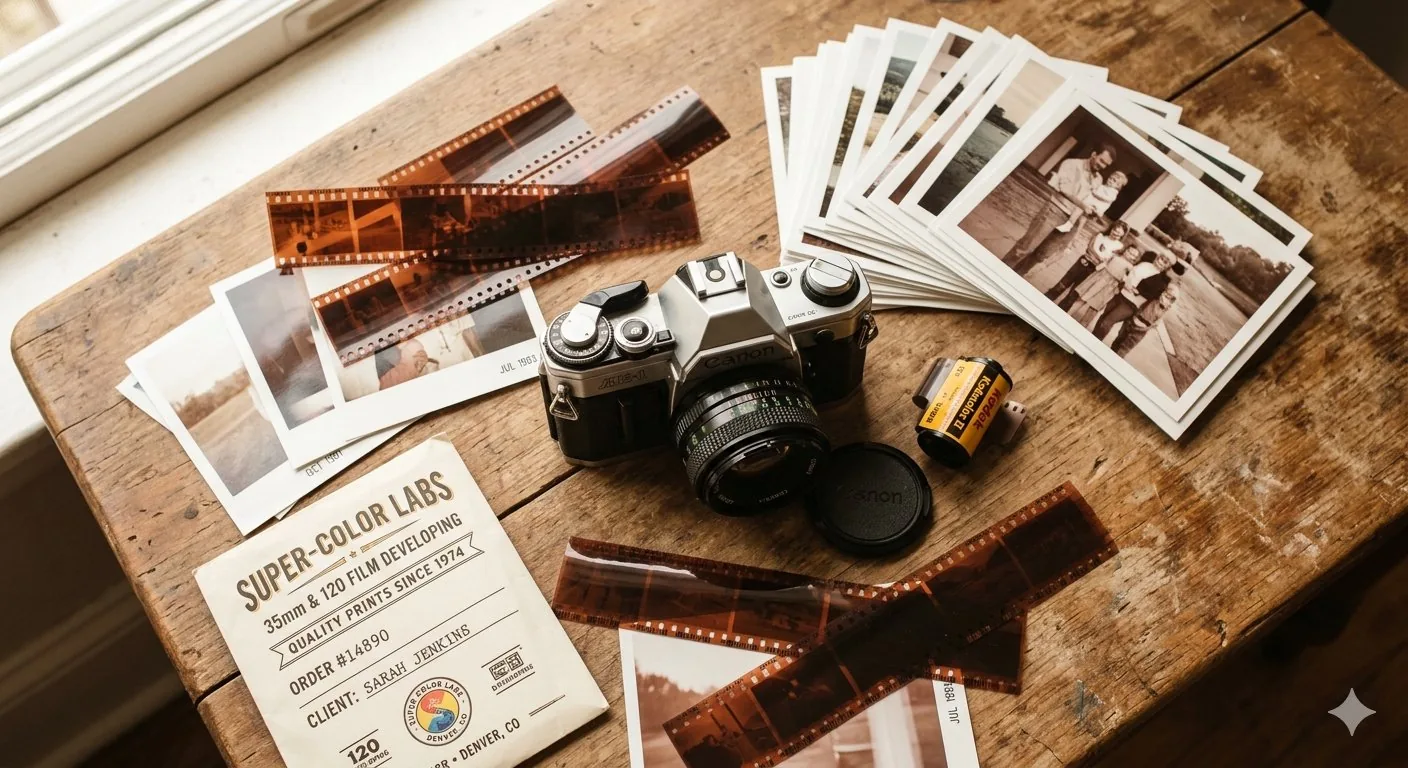
Later, a typical roll of 35mm film gave you 24 or 36 exposures. Film, developing, and printing all cost money. You could not check the picture immediately, and you might wait days or weeks to see the prints.
Those limits encouraged care. Someone gathered the family, checked the light, and asked everyone not to blink. The results could still be blurry or badly framed, but each photograph used one of the available exposures.
Collecting prints had its own pleasures. Opening the envelope meant finding out which pictures worked, which were disappointing, and which you had forgotten taking.
Film stocks also gave photographs distinctive colours and textures. Kodachrome’s saturated blues and the grain of Fuji Superia are part of the look of many family albums. The materials influenced how those years would be remembered.
A camera close at hand
Smartphones made it easier to take photographs throughout the day and share them immediately. A photo could be a message to someone as well as a picture to keep.
Without the limit of a film roll, it became easy to take several versions and choose later. It also became easy to put off that choice. Family portraits now sit among screenshots, duplicates, and accidental shots in the same camera roll.
The way we revisit photos has changed too. In a physical album, someone chose the pictures, arranged them, and perhaps wrote captions. A phone’s memories feature can resurface images automatically, though its choices may differ from the ones a family member would make.
Having a camera nearby has also saved moments that might otherwise have gone unrecorded: a child’s first steps, a view from a bus, or a casual picture of a grandparent at dinner. A photograph does not need careful planning to become one you treasure.

Digital files need care too
A print can survive for decades in a box. Digital photographs need ongoing care: drives fail, services close, and accounts can become inaccessible when no one else knows the password.
Taking more photographs does not guarantee that future generations will be able to see them. A camera roll on an old phone needs a preservation plan just as an album does.
Keeping both kinds of family archive
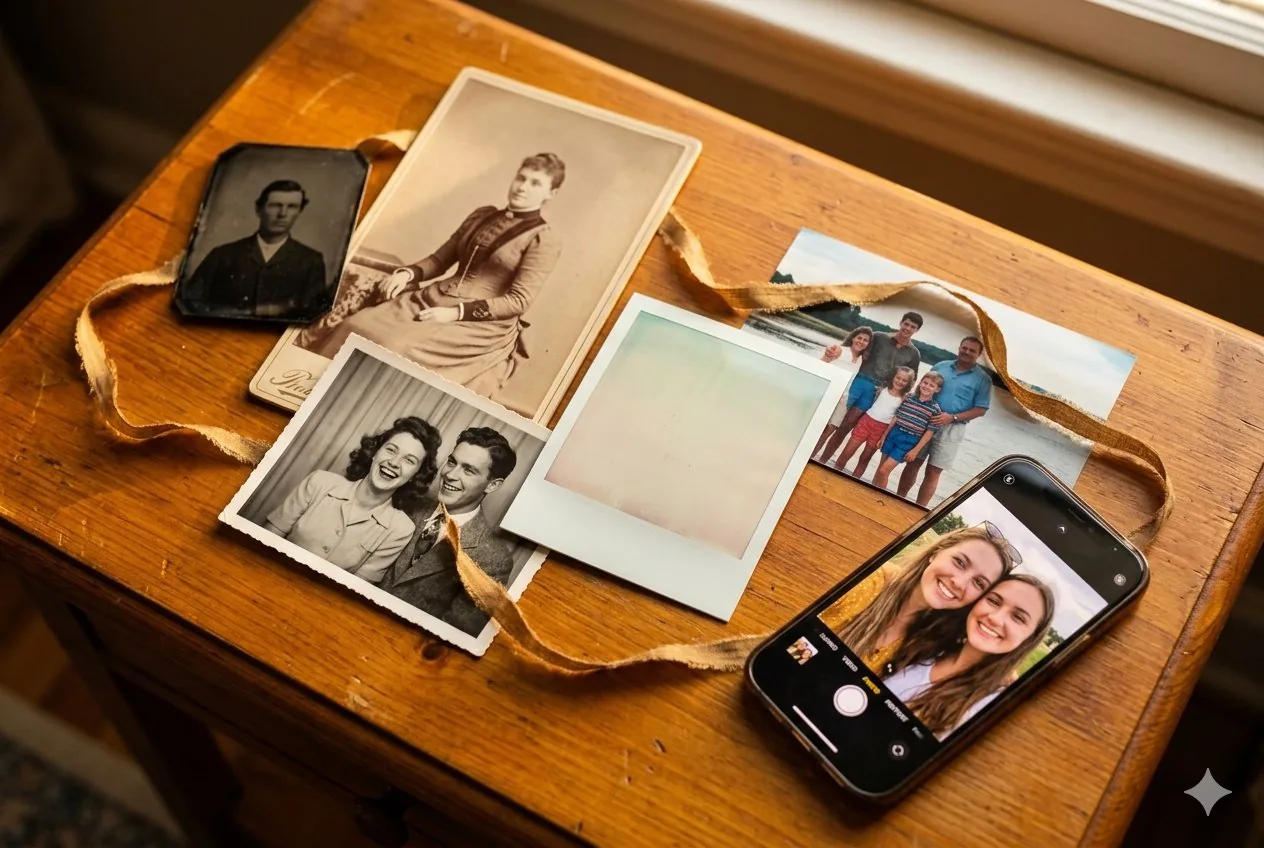
Many families have both old prints and digital collections. The prints can fade, crack, and yellow. Digital files can be lost through device failure, corruption, or inaccessible accounts.
A daguerreotype, a Kodachrome slide, and a phone photo need different kinds of care. Each may hold information about a person or place that survives nowhere else.
Scan the back as well
Restoring a scan can make a damaged photograph easier to see. At BackInTime, that is the work we want to help with. Keep the physical print too, including any writing on it.
The back may hold a date, a nickname, a studio stamp, or a caption such as “Mama and Papa, Easter 1952.” Scan both sides. Those details can tell your family something that the image alone cannot.
Restore a family photo with BackInTime