 BackInTime

Why Photography Started in Black and White
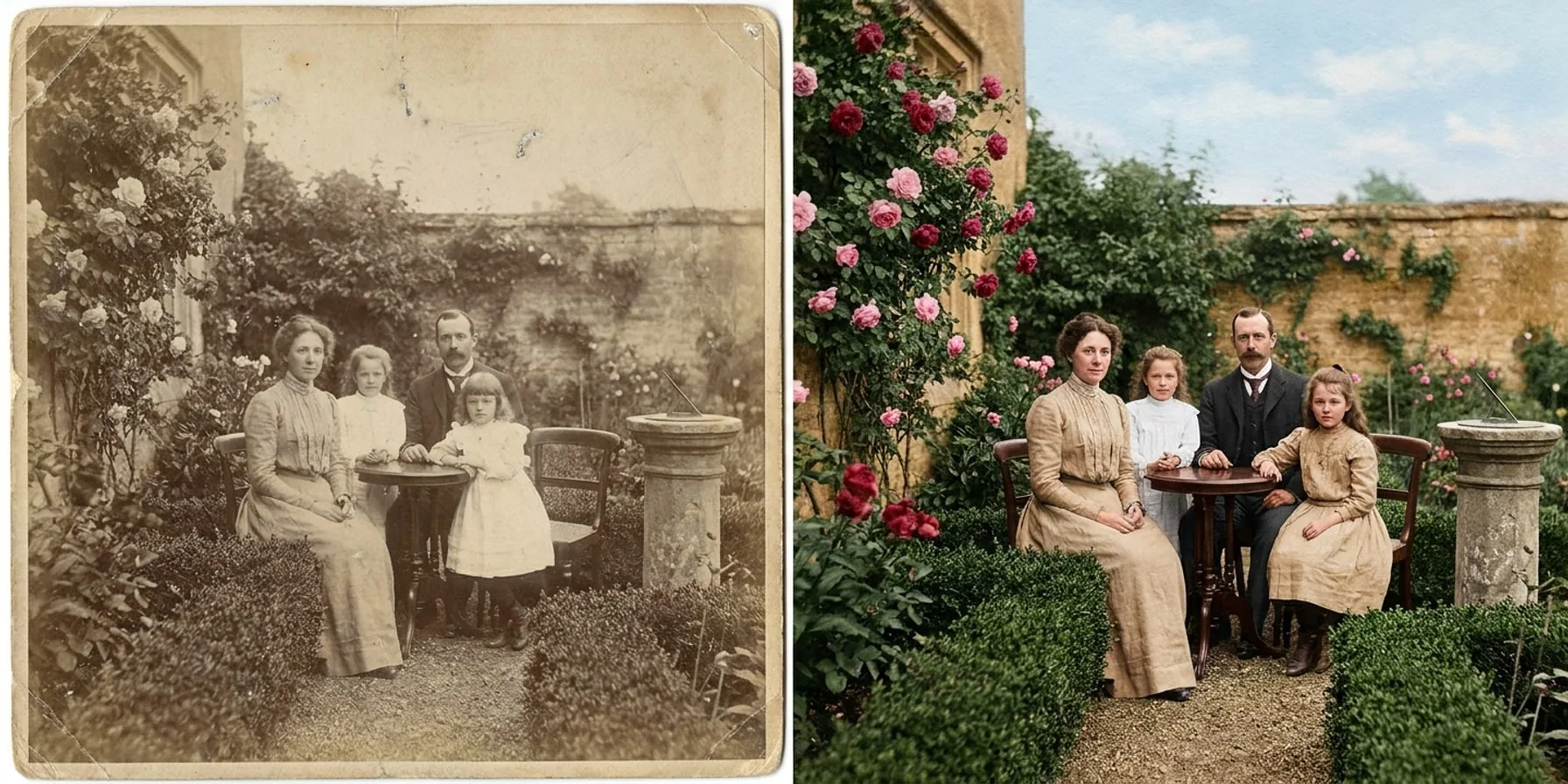
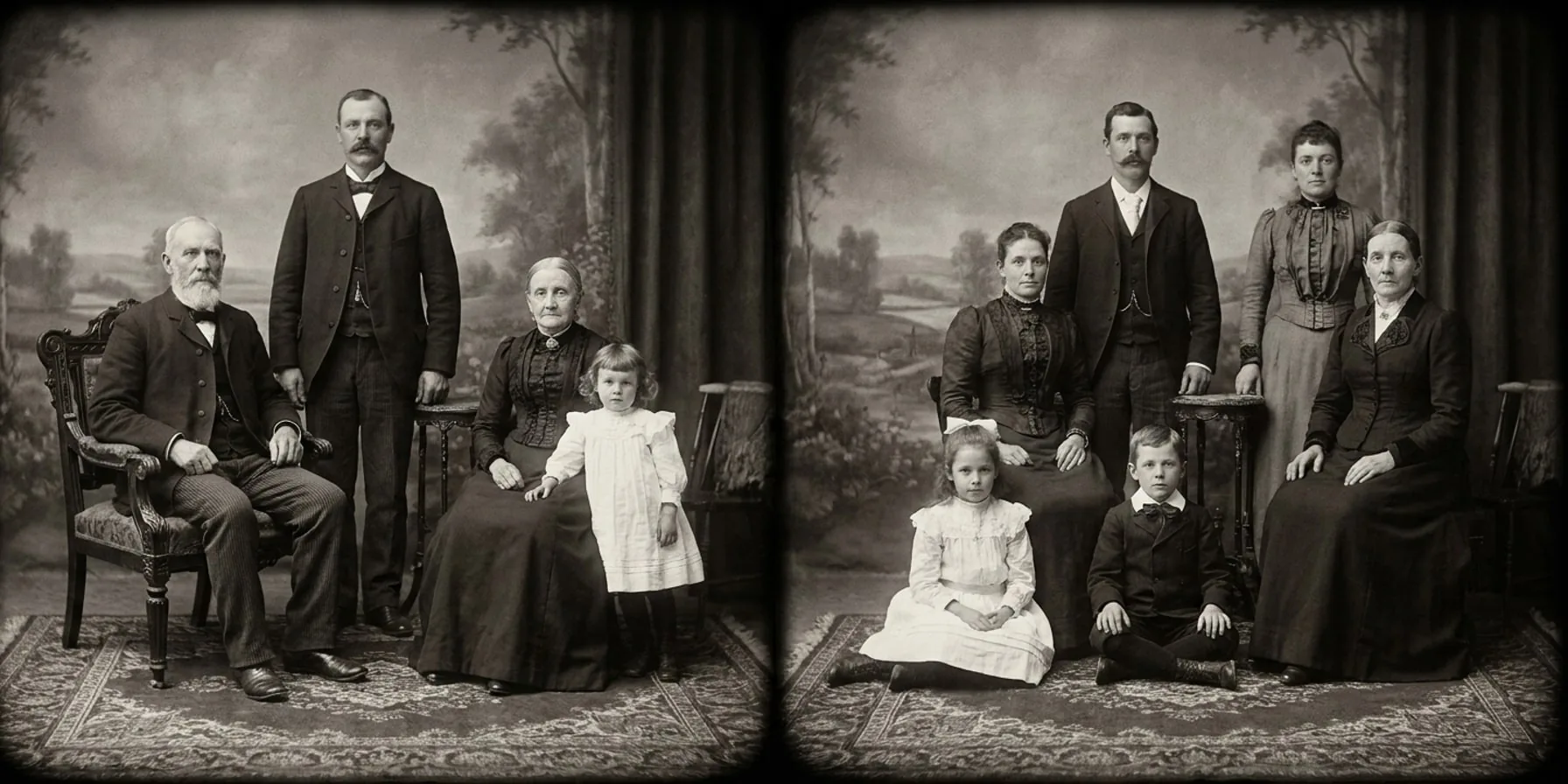
Many family albums from the first half of the twentieth century contain photographs in black, white, silver grey, or warm brown. Those colours mostly reflect the materials photographers had available. Recording colour required more than the light-sensitive chemistry used in an early monochrome photograph.
How early photographs recorded light
Joseph Nicéphore Niépce’s 1826 image used bitumen of Judea, a naturally occurring asphalt that hardens in light. Daguerre’s silvered copper plates of 1839, Fox Talbot’s paper negatives, and later wet collodion plates helped establish silver halides as the basis of photography.
Light exposure creates an invisible latent image in silver halides. Development turns that into the metallic silver that forms the photograph’s dark tones. The process records the response to light without directly recording its hue.
Early emulsions responded strongly to blue and ultraviolet light, weakly to green, and very little to red. A red rose could look almost as dark as its leaves. A blue sky could appear white and lose its clouds.
Photographers knew these limits. Hand-tinting portraits and postcards with pigments let them add colour after printing.
What colour photography needed
To make a colour photograph, photographers needed to record different parts of the spectrum and reproduce them in a viewable image. Several developments made that possible:
- Emulsions had to respond to more colours. Orthochromatic plates, sensitive to blue and green, appeared in the 1870s and 1880s. Panchromatic materials, also sensitive to red, were introduced around 1906 and became more common over the next two decades.
- Light had to be separated into colour components. Photographers could use red, green, and blue filters for separate exposures or a coloured mosaic within a single plate.
- The components had to be recombined. Methods included coloured-light projection, dyed filter layers, and dyes formed during development.
- Dyes and pigments had to reproduce colour accurately and resist fading.
James Clerk Maxwell demonstrated the three-colour principle with a tartan ribbon in 1861, though the photographic materials of his day still had limitations.
The Lumière brothers’ Autochrome, introduced in 1907, used microscopic grains of dyed potato starch. This additive process became the first widely successful commercial colour process.
Kodachrome, introduced in 1935, used a subtractive approach. A complex development process created colour dyes within multiple emulsion layers.
Why black and white remained common
Early colour materials cost more and needed careful processing, including precise temperature control. Dye stability varied: some mid-century consumer prints have faded badly, while well-stored Kodachrome can retain its colours.
Black and white also suited established ways of working. Newspapers printed in monochrome. Portrait studios knew how to retouch it, and photojournalists valued its speed, cost, and compatibility with wire-service transmission.
Kodacolor, introduced in 1942, helped colour snapshots become more common through the 1950s. Colour overtook black and white in everyday family photography in the late 1960s and early 1970s.
What colourisation can tell us
A monochrome print does not tell you the original colour of a dress or a garden. Family accounts and surviving objects may offer clues, but the print itself did not record that information directly.
Colourisation uses those clues, or estimates, to create an interpretation. It can make a familiar photograph feel different and easier to relate to. Keep the monochrome original as well, so later viewers can distinguish the historical image from the colour added to it.